You have a free afternoon in Kumamoto City, or friends are visiting, and you want to see more than the castle. This guide compares six places in Chuo Ward: a contemporary art museum, two writers’ houses, a shrine, a historic garden and the prefectural theater. Two of them are closed now, so check here first. Kumamoto Castle and the museums around it are in a separate guide.
In short
- Open now: the Contemporary Art Museum, Kumamoto (CAMK), the Former Uchitsuboi Residence of Natsume Soseki, Fujisaki Hachiman-gu Shrine and Suizenji Jojuen Garden.
- Closed now: the Lafcadio Hearn House (for the time being, after the 2026 earthquake) and the Kumamoto Prefectural Theater (until the end of February 2028, planned).
- Free to enter: CAMK, except its paid exhibitions. Suizenji Jojuen costs ¥500 for adults; the Soseki house costs ¥200.
- If you moved to Kumamoto City in the last year, show your Welcome Passport (うぇるかむパスポート) for free entry to the Soseki house and to CAMK’s current exhibition.
Checked with official pages on October 5, 2026.
1. Which places are open now?
Depends on the place
| Place | Open now? | Adult entry | Closed |
|---|---|---|---|
| CAMK | Open | Free; exhibitions extra | Tue |
| Soseki house | Open | ¥200 | Mon |
| Hearn House | Closed for now | ¥200 when open | Not open |
| Fujisaki Hachiman-gu | Open | No fee listed | None listed |
| Suizenji Jojuen | Open | ¥500 (16 and over) | Open daily |
| Prefectural Theater | Closed until Feb 2028 | Not open | Not open |
When the closing day of CAMK or the Soseki house is a public holiday, they open that day and close on the next weekday instead. Both also close over the New Year. The details are in each section below.
2. The places, one by one
2.1 Contemporary Art Museum, Kumamoto (熊本市現代美術館, CAMK)
Kumamoto City
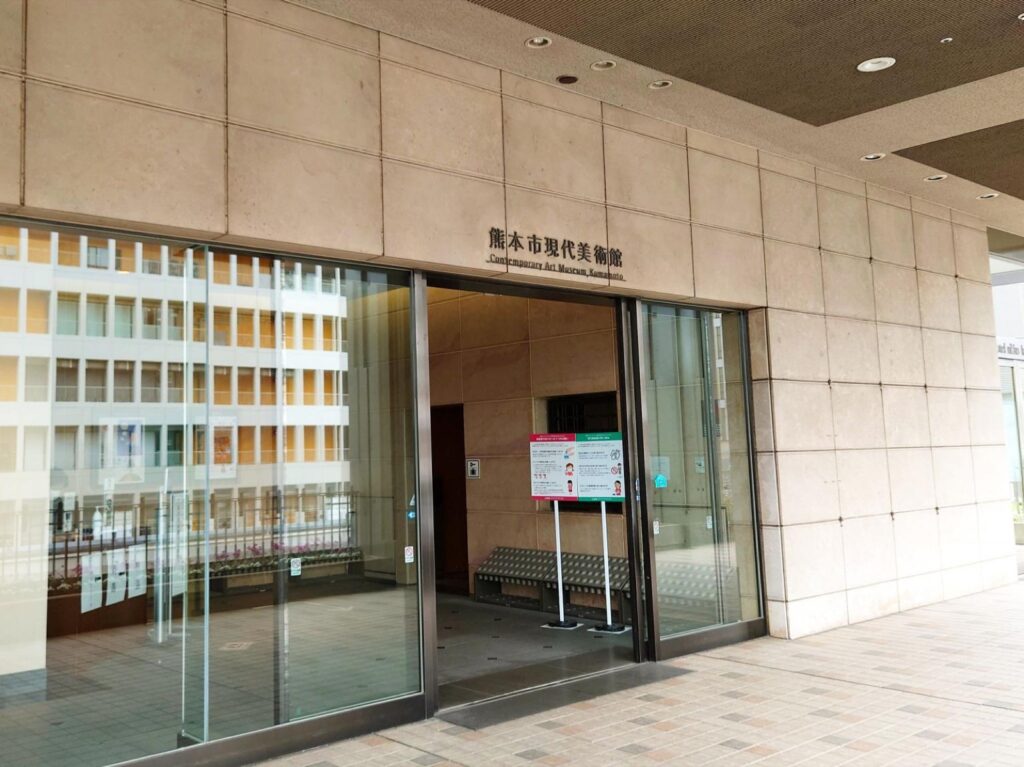
CAMK is Kumamoto City’s art museum in the city center. Most of the building is free to use, including the Home Gallery art library and the Machinaka Kosodate Hiroba space for parents and young children. You pay only for the exhibitions in Galleries I and II. It is open 10:00–20:00 (last entry to exhibitions 19:30).
Until November 29, 2026, Galleries I and II show “For a Placard” (プラカードのために), with works by seven artists. Tickets are ¥1,300 for adults, ¥1,000 for people aged 65 and over, ¥800 for students from high school up, and free for junior high school students and younger. Show a tram and bus one-day pass and you pay the lower price (¥1,100 for adults). The exhibition is closed on Tuesdays except November 3, and also on November 4. Until October 25, two smaller shows in Gallery III and the Nobumichi Ide Memorial Gallery are free.
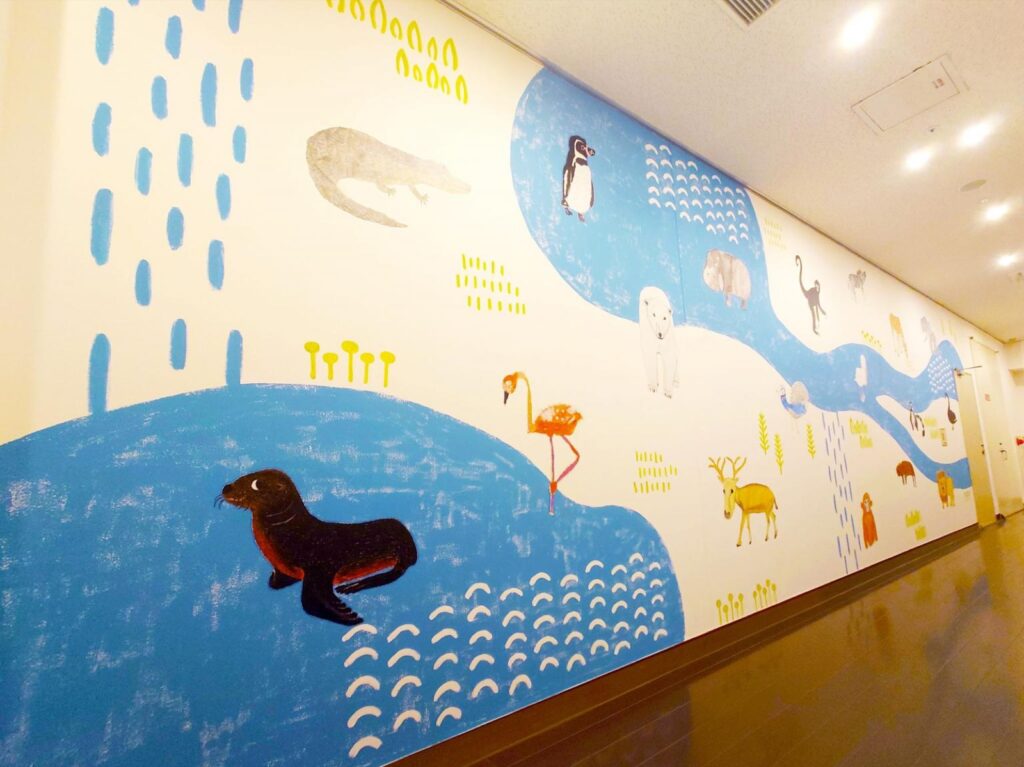
The museum is on the 3rd floor of the Bipuresu Kumanichi Kaikan building (びぷれす熊日会館), a one-minute walk from the Torichosuji (通町筋) tram stop or bus stop. Take the escalator or elevator on the tram-street side. The museum asks visitors to use public transport.
Address: 2-3 Kamitoricho, Chuo-ku, Kumamoto City (3rd floor) · Google Maps
Phone: 096-278-7500
2.2 Former Uchitsuboi Residence of Natsume Soseki (夏目漱石内坪井旧居)
Kumamoto City
The novelist Natsume Soseki (夏目漱石) lived in Kumamoto for four years and three months and moved house five times. This was his fifth home, and his eldest daughter, Fudeko, was born here. Kumamoto City says his wife later called it the best of the houses they lived in in Kumamoto. It is a historic site designated by the city, and it reopened on February 9, 2023, after repairs from the 2016 earthquake. Some exhibits from the closed Lafcadio Hearn House can be seen here.
It is open 9:30–16:30. It is closed on Mondays (the next weekday if Monday is a public holiday) and from December 29 to January 3. Entry is ¥200 for high school students and adults and ¥100 for elementary and junior high school students. The nearest bus stop is Tsuboibashi (壺井橋), a 4-minute walk away.
A 2019 Kumamoto City program (in Japanese) about Soseki’s Kumamoto homes, including this one.
Address: 4-22 Uchitsuboimachi, Chuo-ku, Kumamoto City · Google Maps
Phone: 096-325-9127
2.3 Lafcadio Hearn House (小泉八雲熊本旧居): closed for now
Kumamoto City
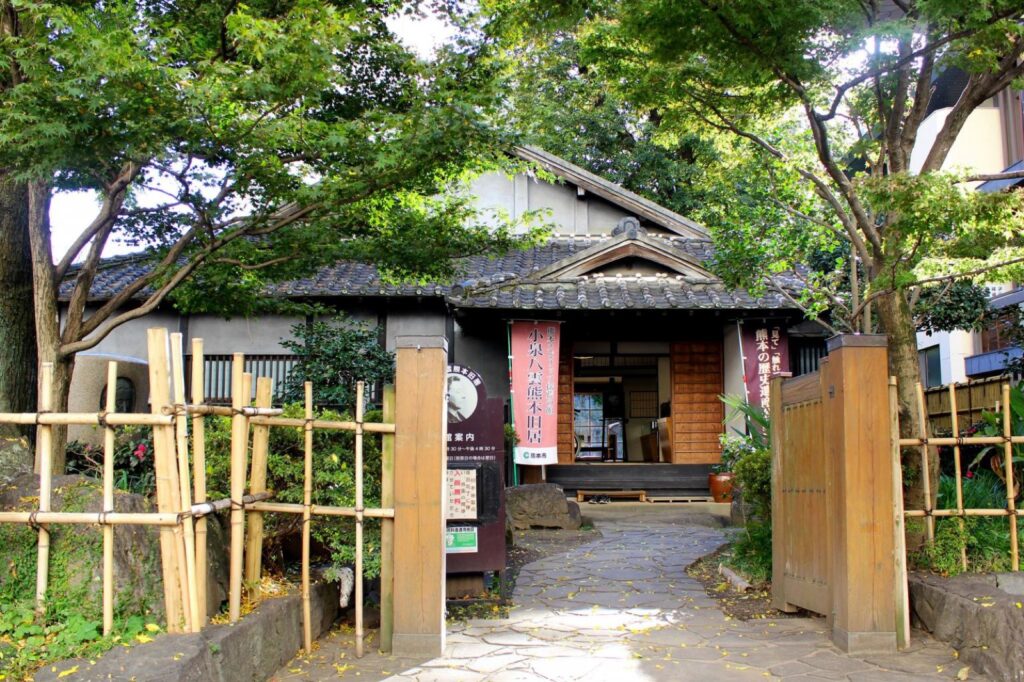
Kumamoto City says the house is closed for the time being because of the 2026 Kumamoto earthquake (令和8年熊本地震). The city gives no reopening date. Some of its exhibits are on show at the Soseki house above.
Lafcadio Hearn, known in Japan as Koizumi Yakumo (小泉八雲), came to Kumamoto in 1891 to teach at the Fifth Higher Middle School, now Kumamoto University. This was the first house he lived in here. Kumamoto City says he wrote or planned Glimpses of Unfamiliar Japan, Out of the East and Kokoro here. The house is a tangible cultural property of the city.
While it is closed, you can visit the city’s online Lafcadio Hearn House Digital Museum, which has pages in English, Korean and Chinese and a VR tour.
A 2019 Kumamoto City program (in Japanese) about the house.
Address: 2-6 Anseimachi, Chuo-ku, Kumamoto City · Google Maps
Phone: 096-354-7842 (for group visits and questions, Kumamoto City’s Cultural Properties Division: 096-328-2740)
2.4 Fujisaki Hachiman-gu Shrine (藤崎八旛宮)
Fujisaki Hachiman-gu Shrine
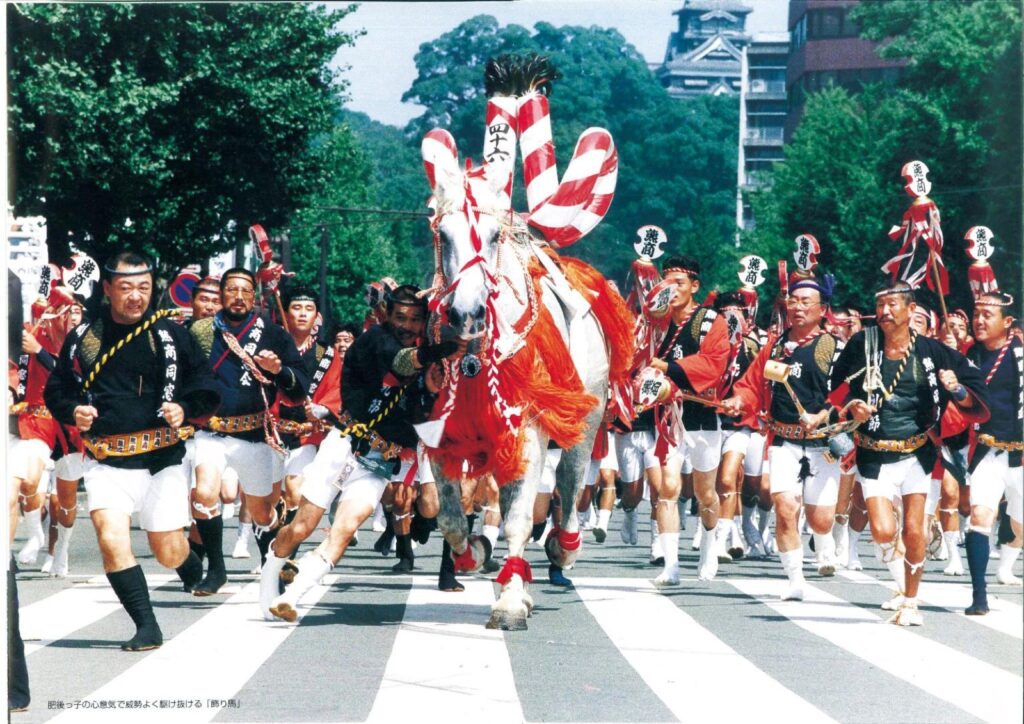
The shrine says anyone may visit and pray in whatever way they feel is right. From October 16 to March 31 the gate is open 6:00–17:30, and from April 1 to October 15 it is open 5:30–18:00. Prayer services (御祈祷), such as Shichi-go-san (七五三) for young children, are accepted at the shrine office from 9:00 to 17:00, with different hours at New Year, on June 1 and on November 15.
The shrine’s Grand Festival (例大祭) is held every autumn. In 2026 the shrine cancelled the festival procession planned for September 20, because of the earthquake.
The nearest bus stop is Fujisakigu-mae (藤崎宮前), a 5-minute walk, on buses from Sakuramachi Bus Terminal toward Koshi (子飼). From Suidocho (水道町) tram stop it is about 15 minutes on foot. The car park has room for about 100 cars, but you cannot park there on January 1–3 or on the day of the festival procession.
Address: 3-1 Igawabuchimachi, Chuo-ku, Kumamoto City · Google Maps
Phone: 096-343-1543
2.5 Suizenji Jojuen Garden (水前寺成趣園)
Suizenji Jojuen
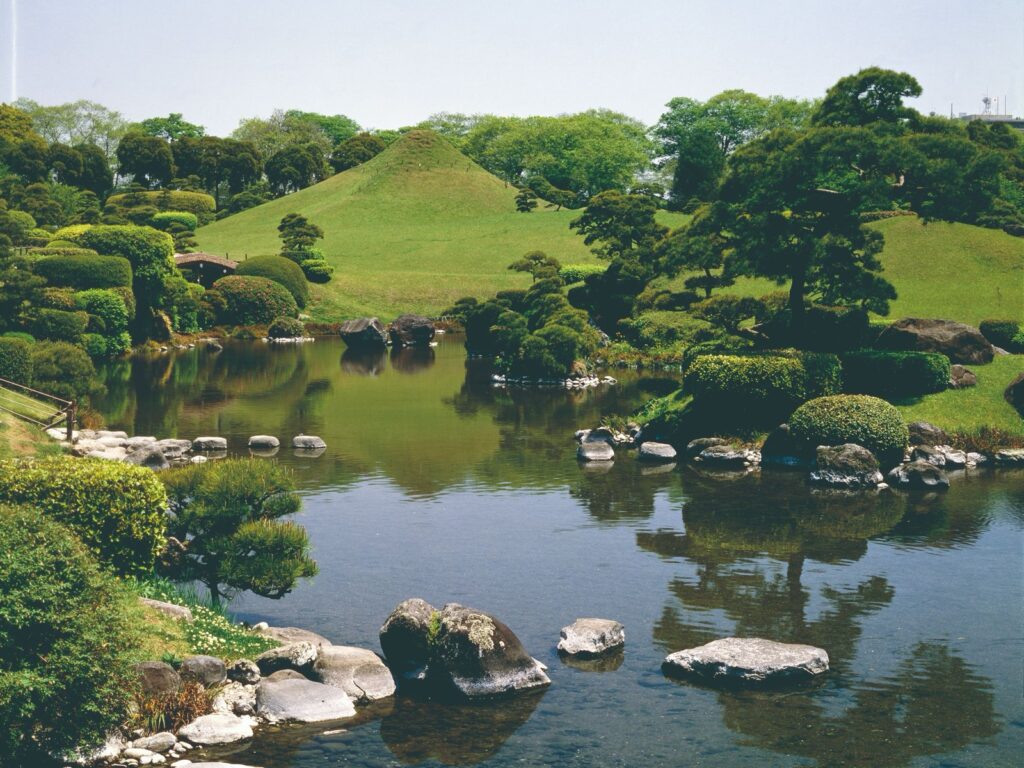
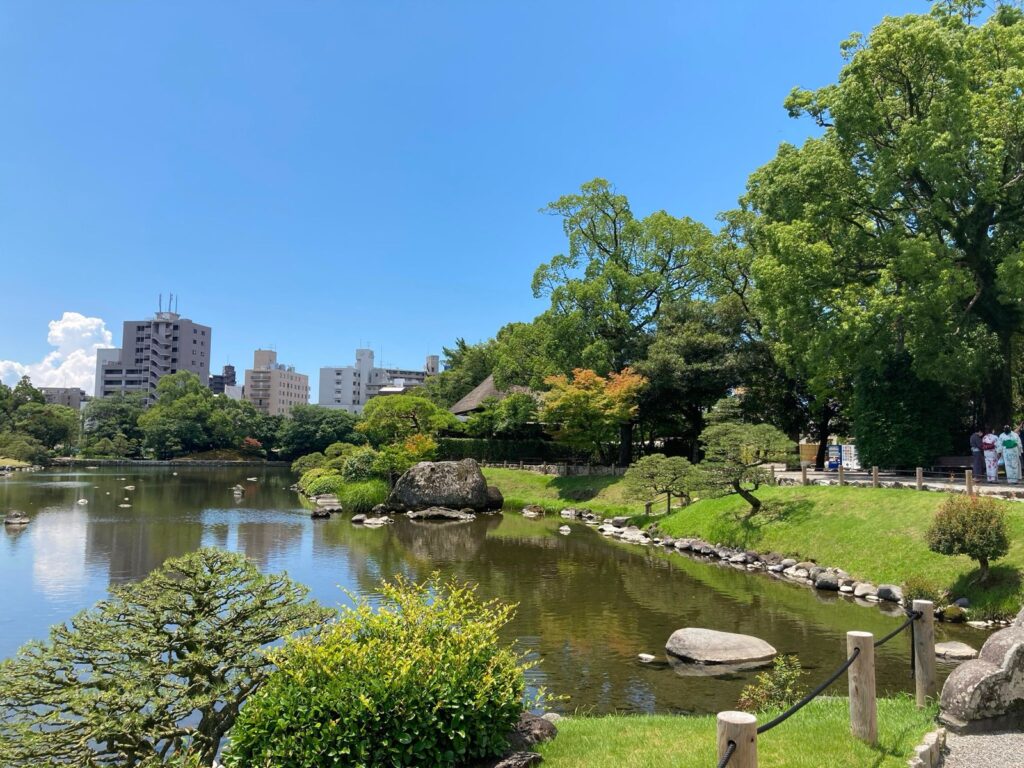
Suizenji Jojuen is a Japanese garden with Izumi Shrine (出水神社) inside. The garden says a walk around takes 30 to 40 minutes. It is open every day, 8:30–17:00 (last entry 16:30). Since April 1, 2026, entry is ¥500 for people aged 16 and over and ¥200 for ages 6 to 15. You can pay by credit card, QR code payment or a transport IC card.
In October 2026, Izumi Shrine holds its autumn festival in the garden: old martial arts (古武道) at 11:00 and kendo at 16:00 on Sunday, October 11, and horseback archery (流鏑馬) at 14:00 on Sunday, October 18. Watching is free, but you pay the garden’s entry fee.
Guided walks in Japanese or English cost ¥1,000 per person (¥5,000 for a group of 5 or more), on Mondays, Tuesdays, Thursdays and Fridays. Contact Yusuitei (湧水亭) in advance on 096-285-8893.
A Kumamoto City video (in Japanese) following a guided walk through the garden and the nearby lake.
Get off at Suizenji Koen (水前寺公園) on the Kumamoto City Tram, about a 5-minute walk, or walk about 12 minutes from JR Shin-Suizenji Station. There is no visitor car park. Use the Main Gate or the North Gate; the other gates are usually closed.
Address: 8-1 Suizenjikoen, Chuo-ku, Kumamoto City · Google Maps
Phone: 096-383-0074
2.6 Kumamoto Prefectural Theater (熊本県立劇場): closed until 2028
Kumamoto Prefecture
The theater, with a concert hall and a drama hall, closed on October 1, 2026 for building work to make it stronger in earthquakes. The work is planned to end in February 2028. The car park closes from October 15, 2026.
The theater’s office moves to a temporary office and opens there on Friday, October 16, 2026, from 9:00 (9:00–19:00). From October 12 to 15 the office, counter and phones are closed for the move. The office keeps selling tickets for events around the prefecture, and the phone number stays the same.
Temporary office: 2nd floor, Higo Bank Gakuen-odori Branch, 3-2-30 Oe, Chuo-ku, Kumamoto City · Google Maps
Phone: 096-363-2233
3. How can I pay less?
Kumamoto City
- Get your Welcome Passport. Kumamoto City gives new residents a free pass, the Welcome Passport (うぇるかむパスポート), at ward offices and branch offices. It gives free entry to the city’s memorial houses, including the Soseki house, for one year from issue, and free entry to CAMK’s current exhibition.
- Show a one-day pass. A tram one-day or 24-hour pass, the Wakuwaku 1day Pass or a SUNQ Pass gives 20% off at the city’s memorial houses, and the lower price at CAMK’s exhibition. See one-day passes in Kumamoto City.
- Bring your child’s school name tag. Children at elementary and junior high schools in Kumamoto City enter the memorial houses free with a school name tag or student handbook. Preschool children are free too.
- Over 65 and living in the city? Kumamoto City residents aged 65 and over enter the memorial houses free with proof of address.
4. Can I get help in English?
Depends on the place
CAMK has an English website with exhibitions, hours and access. Suizenji Jojuen has an English version of its visitor guide and offers guided walks in English if you book ahead. The Hearn House Digital Museum has English pages. Kumamoto City’s own pages about the memorial houses are in Japanese; its tourism site has English pages, but on October 5, 2026 the English page for the Hearn House still listed prices and did not mention the closure, so rely on the city’s notices. None of the places says whether staff at the counter speak English, so ask before you go.
Common questions
When will the Lafcadio Hearn House reopen?
Kumamoto City has not given a date. It says the house is closed for the time being because of the 2026 earthquake.
Can I park at these places?
Suizenji Jojuen has no visitor car park and the Hearn House has none of its own. CAMK asks visitors to use public transport; if you drive, it points to the basement car park of the Bipuresu Kumanichi Kaikan building or nearby coin parking, with no museum discount. Fujisaki Hachiman-gu Shrine has a car park for about 100 cars, closed on January 1–3 and on the festival procession day.
Can I buy concert tickets while the Prefectural Theater is closed?
Yes. The theater says its temporary office keeps selling tickets for events around the prefecture, by phone and at the counter, from October 16, 2026.
Can I pay by card at Suizenji Jojuen?
Yes. The garden accepts credit cards, QR code payment and transport IC cards.
Next steps
- Kumamoto Castle and the places around it: the castle, the City Museum and the Prefectural Museum of Art.
- One-day passes in Kumamoto City: trams and buses.
- Parks and the zoo for families.
- Moving to Kumamoto: a checklist, including the Welcome Passport.
Sources (checked October 5, 2026)
- CAMK: hours and admission, For a Placard, top page (exhibitions), access, English website
- Kumamoto City: memorial houses (updated October 1, 2026), memorial house admission, free entry and discount rules (PDF), moving in and the Welcome Passport, Lafcadio Hearn House Digital Museum, tourism page for the Hearn House (English)
- Fujisaki Hachiman-gu: top page, visiting, access and prayer hours, 2026 procession cancelled
- Suizenji Jojuen: visitor guide, new prices from April 1, 2026, access, Izumi Shrine autumn festival 2026, visitor guide (English)
- Kumamoto Prefectural Theater: closure, car park closure, temporary office (updated September 30, 2026)
- Kumamoto City Transportation Bureau: tram boarding guide in English (PDF)