Fukuoka City’s public transport is a mix of one subway operator, two train companies and several bus companies — plus a handful of IC cards that mostly work on all of them. Here is what each one covers, and which card or pass to reach for.
In short
- The subway has 3 lines. Only the Kuko (Airport) Line reaches Fukuoka Airport.
- Nishitetsu runs most city buses and a train line from Tenjin; JR Kyushu runs the other trains.
- Hayakaken, nimoca, SUGOCA and Japan’s other nationwide IC cards work on the subway, Nishitetsu and JR Kyushu (not at every JR Kyushu station).
- The subway’s own 1-day pass is ¥640 for adults, ¥320 for children, and covers all 3 subway lines only — not buses or Nishitetsu trains.
Checked with official pages on 27 September 2026.
1. The subway: 3 lines
Fukuoka City
Fukuoka City Subway (福岡市地下鉄) runs 3 lines:
- Kuko (Airport) Line — runs west from Fukuoka Airport to Meinohama, through Hakata and Tenjin. This is the only subway line that reaches the airport.
- Hakozaki Line — runs from Nakasu-Kawabata to Kaizuka. Some trains run through onto the Kuko Line.
- Nanakuma Line — runs from Hashimoto to Hakata, through Tenjin-Minami.
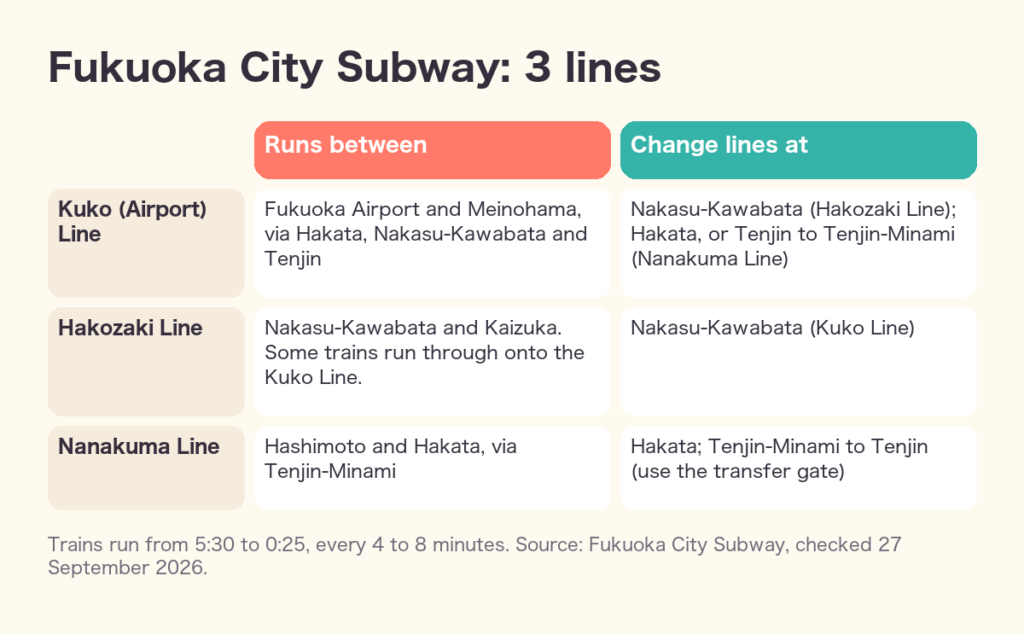
Trains start at 5:30 and come every 4 to 8 minutes, according to the subway’s English site. Since April 1, 2026, the last trains on all three lines run later from Monday to Saturday (the “Midnight Train”). For example, the subway’s press release gives these Saturday last trains: 0:40 from Hakata toward Meinohama, 0:26 from Nakasu-Kawabata toward Kaizuka and 0:33 from Tenjin-Minami toward Hashimoto. On Sundays and national holidays, the last trains leave earlier. Check the time for your station in the timetables from April 2026 (in Japanese). To change between the Nanakuma Line and the Kuko or Hakozaki Line, use the transfer gate and keep your ticket.
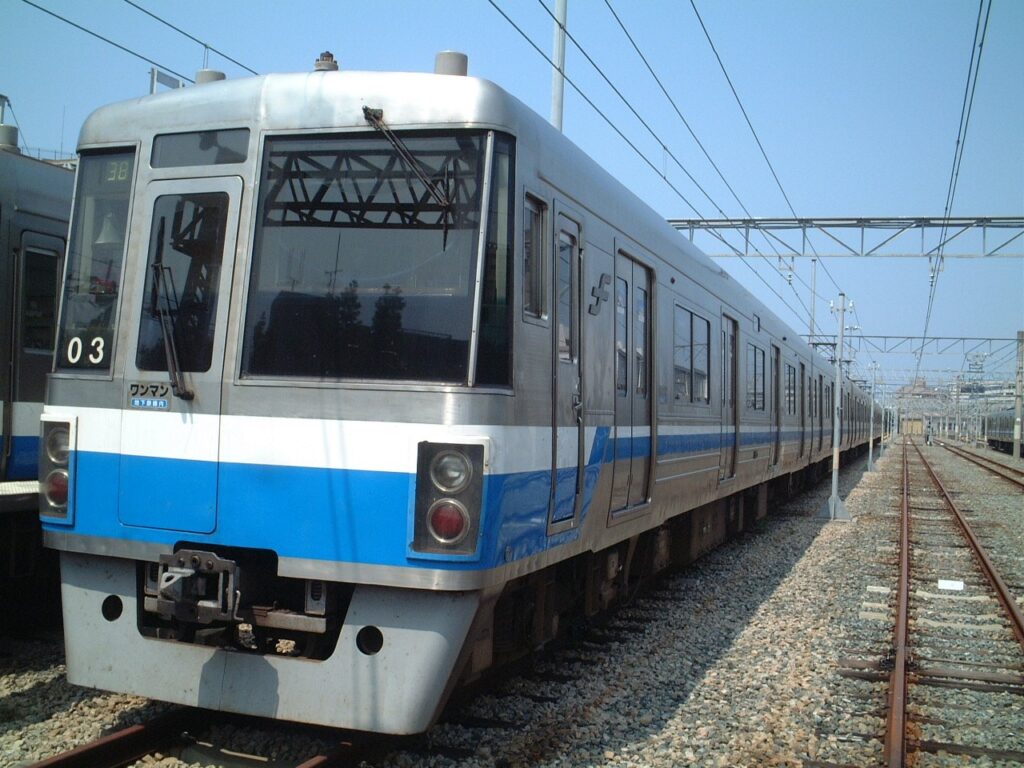
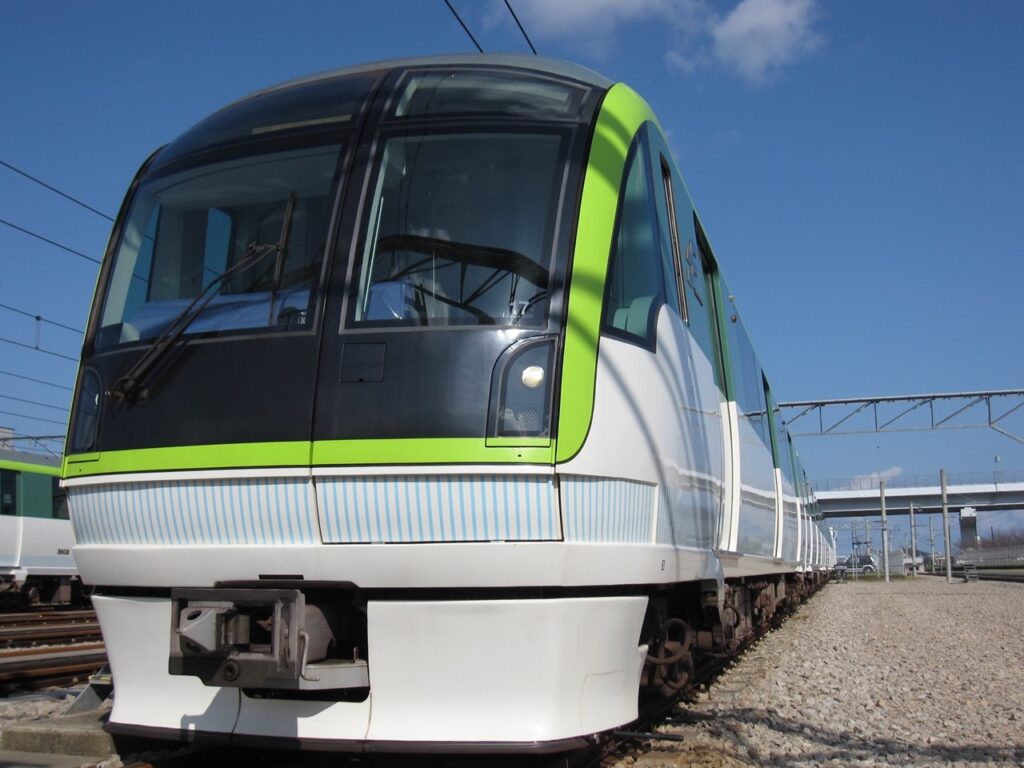
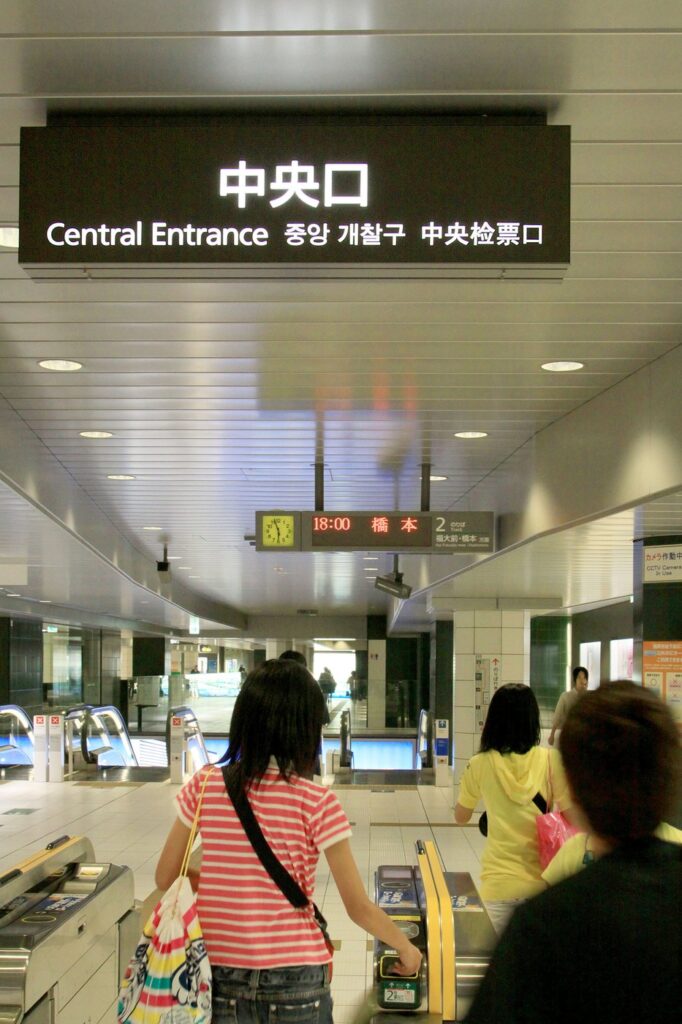
Photo source: Marugoto Fukuoka-Hakata, Fukuoka City’s photo library
Plan a route and check the fare with the subway’s own route search and fare search, or see the route map on the subway’s English site. Fares are set by distance: ¥210 to ¥380 for adults and ¥110 to ¥190 for children (elementary school age). Children under 6 ride free with a paying adult, with some conditions.
For questions, the subway’s Customer Service Center is 092-734-7800 (8:00–20:00, every day). The Fukuoka City International Foundation says telephone interpretation in English, Chinese and Korean is available there and at every station counter.
2. Nishitetsu and JR Kyushu trains
Depends on the provider
Outside the subway, Fukuoka City International Foundation (FCIF, 福岡よかトピア国際交流財団) says two companies run trains in Fukuoka City: Nishitetsu (Nishi-Nippon Railroad Co., Ltd.), which runs the Tenjin-Omuta Line from its central hub at Fukuoka (Tenjin) Station, and JR Kyushu, whose central station in the city is Hakata Station. FCIF notes that not all JR Kyushu stations accept IC cards, so check before you rely on tapping in and out at a smaller station.
3. Nishitetsu buses
Nishitetsu
FCIF says three companies run buses in Fukuoka — Nishitetsu, Showa and JR Kyushu — and that Nishitetsu Bus covers almost all of Fukuoka City. Nishitetsu’s English timetable and route search is at jik.nishitetsu.jp. For questions in English, Chinese or Korean, Nishitetsu’s Customer Service Center is 0570-00-1010.
Nishitetsu’s English guide explains how to ride a city bus:
- Check the destination on the front of the bus.
- Get on at the center door. Tap your IC card on the reader. If you pay cash, take a numbered ticket from the orange box.
- Watch the monitor at the front. It shows the next stop and the fare.
- Press the stop button when your stop is shown and announced.
- Pay at the front when you get off. Tap your IC card again, or put the exact fare and your numbered ticket in the fare box. You can change ¥1,000 notes and ¥500, ¥100 and ¥50 coins on the bus, but not ¥10,000, ¥5,000 or ¥2,000 notes or the new ¥500 coin.
A Nishitetsu video in English on riding with an IC card or contactless payment, from Nishitetsu’s official YouTube channel:
What to say
この バス は 天神 に 行き ます か?
Kono basu wa Tenjin ni ikimasu ka?
Does this bus go to Tenjin? Swap in any stop name for Tenjin.
4. IC cards: which one do I need?
Depends on the provider
You do not need to match the card to the company. Fukuoka’s own IC card, Hayakaken (はやかけん), and the other cards used around it — nimoca (Nishitetsu) and SUGOCA (JR Kyushu) — are part of Japan’s group of 10 nationwide IC cards that work interchangeably on each other’s participating trains and buses. That means a Suica bought in Tokyo, an ICOCA bought in Osaka, or a nimoca bought at a Nishitetsu station in Fukuoka will all tap onto the subway gates. Hayakaken itself is sold at Fukuoka City Subway stations and, Fukuoka City Subway says, can be used on other cities’ compatible trains and buses too.
Fukuoka City Subway sells Hayakaken at ticket machines with the Hayakaken logo and at its Customer Service Center, loaded with ¥1,000 to ¥10,000. Each amount includes a ¥500 deposit. The unregistered card is for adults only and cannot be reissued if lost. A registered card, in your name, can be reissued for ¥1,020 (a ¥520 fee plus the ¥500 deposit). Nishitetsu sells nimoca for ¥2,000, which is ¥1,500 of credit and a ¥500 deposit, at its ticket machines and train ticket windows.
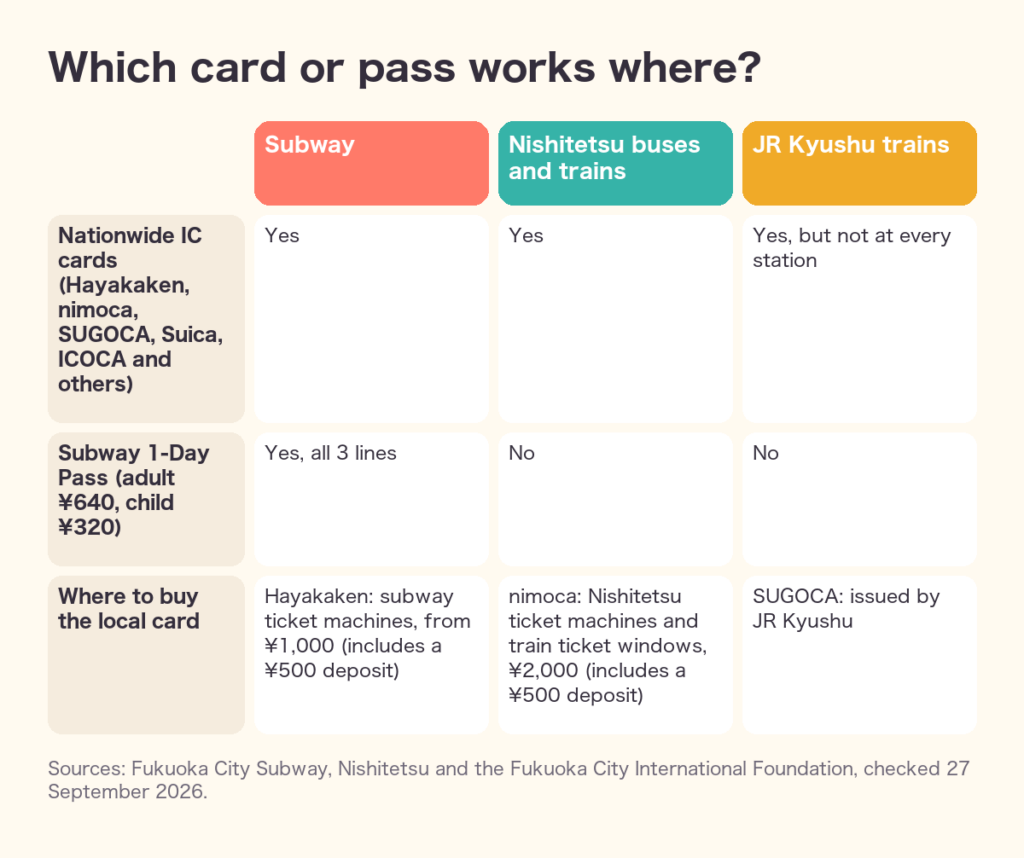
Each company’s own card can also carry a commuter pass for that company’s routes. For the subway, Fukuoka City Subway sells commuter passes for 1, 3 or 6 months on Hayakaken, at ticket machines with the Hayakaken logo.
5. Day passes
Fukuoka City
Fukuoka City Subway sells a 1-day pass for unlimited travel on all 3 subway lines: ¥640 for adults, ¥320 for children, sold at subway ticket machines. Fukuoka City Subway says a ticket bought at a machine can only be used on the day you buy it, and the pass covers the subway only — not Nishitetsu or JR Kyushu trains, and not buses. If your day mixes subway and Nishitetsu bus rides, tapping an IC card each time may work out simpler than buying a pass; compare against your planned stops.
Landing at Fukuoka Airport first? See Fukuoka Airport: getting to the city by subway, bus and the terminal shuttle.
6. Common questions
Can I use my Suica or ICOCA card from another city on the Fukuoka subway?
Yes. Fukuoka City Subway’s Hayakaken is one of Japan’s 10 mutually compatible nationwide IC cards, along with Suica, ICOCA, PASMO, TOICA, manaca, PiTaPa, Kitaca, SUGOCA and nimoca, so a card from any of those systems taps onto the subway gates.
Does the subway 1-day pass cover buses?
No. Fukuoka City Subway’s 1-day pass covers the subway’s 3 lines only. It does not cover Nishitetsu, Showa or JR Kyushu buses, or Nishitetsu or JR Kyushu trains.
Which company do I contact if a bus is late or cancelled?
It depends on the operator. Nishitetsu posts service updates on its own site and can be reached at 0570-00-1010. For Showa or JR Kyushu buses, check that company’s own site.
Sources (checked September 2026)
- Fukuoka City Subway (English), Route map and 1-Day Pass
- Fukuoka City Subway: Route search and Fare search
- Fukuoka City International Foundation (FCIF): Public Transportation
- Fukuoka City Subway: Ordinary tickets and fares (普通券)
- Fukuoka City Subway: Midnight Train (Japanese) and timetables from April 1, 2026 (Japanese)
- Nishitetsu: Catching and getting off Nishitetsu Bus, Nishitetsu (English) and Nishitetsu Bus and Train timetable/route search (English)